A Week of Contrasts: Strong Start, Tempered Middle, Resilient Finish
The market opened with a rare alignment: all three major indexes accelerated higher on headlines of a preliminary U.S.–China trade detente. Signals of easing tariff threats and possible concessions on rare earths, agricultural purchases, and digital services shaved off some of the geopolitical risk premium and nudged valuations toward a more “normal” cost of risk. Futures on the S&P and Nasdaq extended the move, with beta sectors—especially chipmakers and high tech—retaking the lead.
Monetary Policy Intrigue: Rate Down, Liquidity Up, Cooler Rhetoric
By midweek, the driver shifted. As expected, the Fed cut the funds rate by 25 bps and announced a halt to quantitative tightening—a rare combination this cycle that reduces the liquidity headwind. In theory, that mix should buoy both equities and duration. But Jerome Powell’s press conference cooled excessive optimism: another cut in December is “far from a foregone conclusion.” Markets swiftly recalibrated the easing path, the 10-year yield bounced toward local highs, and indexes, after setting intraday peaks, gave back part of the gains to finish mixed.
Corporate Season: EPS Beats Mask Slowing Revenues
Structurally, earnings look better than feared: the share of EPS beats comfortably tops 80%, unusually high for a late-cycle phase. Under the hood, though, overall profit growth is decelerating to a two-year low, and sales growth is cooling versus Q2. The market is repricing this duality in real time: some giants clear consensus and pull the indexes higher, but any hint of rising expenses, margin pressure, or heavier capex triggers double-digit drawdowns. Investors still pay up for quality, yet they are less willing to ignore valuation stretch.
Tech and Semis: Asymmetric Expectations and “Political Beta”
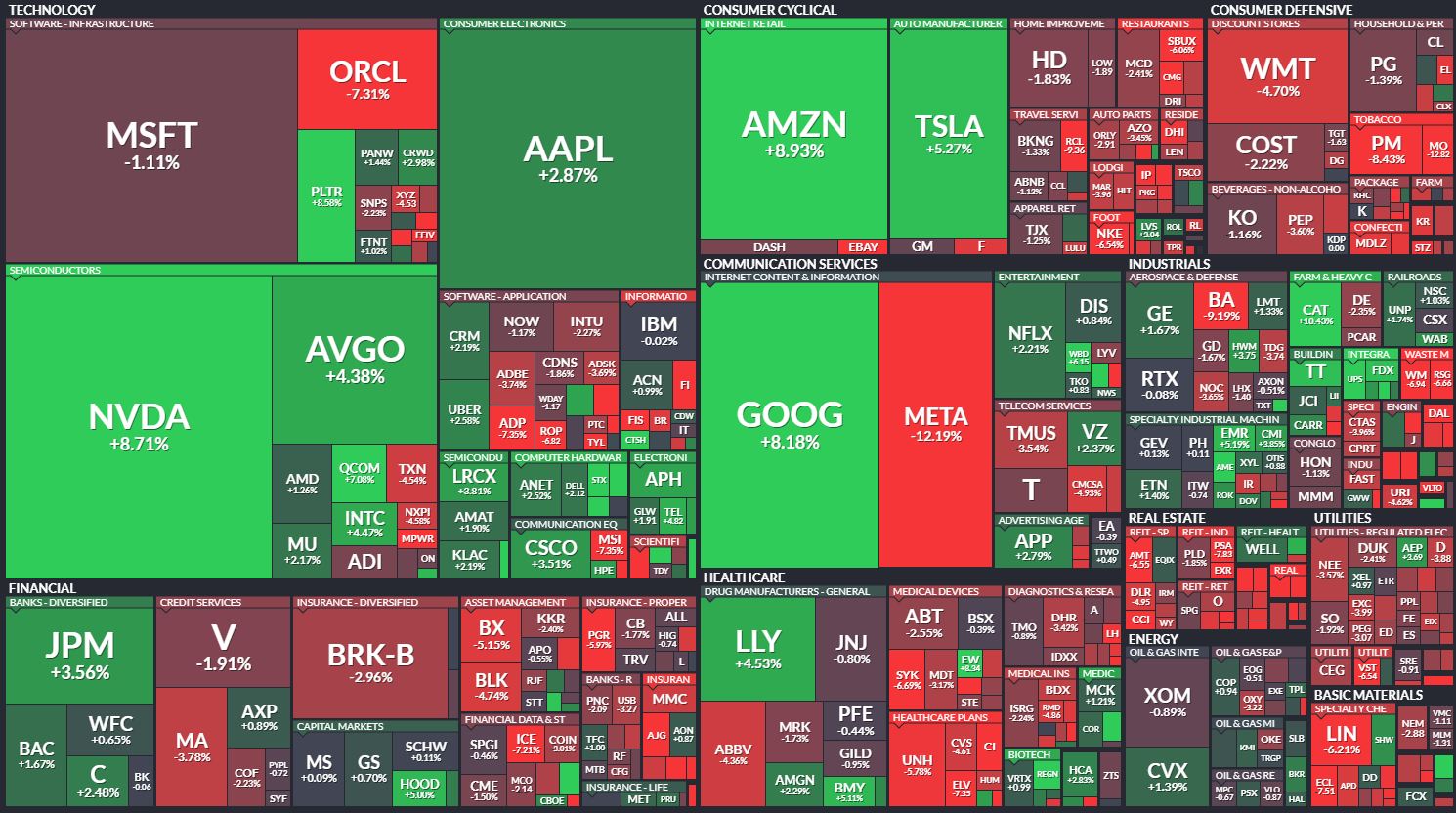
Tech stayed center stage all week, but price action was uneven. Semiconductors enjoyed support from product news, partnerships, and the prospect of improved access to advanced chips if U.S.–China tensions ease—any positive rhetoric around export rules and supply chains quickly expands multiples. At the same time, mega-platforms face a different problem—expectations are sky-high, and the slightest nod to higher opex becomes a selloff catalyst. The market is again splitting the sector into “revenue growth with opex discipline” versus “growth at any cost”—the latter is converting into share prices ever more poorly.
Bonds: Between Safe Haven and “Soft Reflation”
Rates had a complicated week. On Monday, the risk-premium fade after trade news dampened demand for safety and pushed T-note prices lower. Anticipation of a QT halt then rekindled interest in the belly and the long end, but Powell’s hawkish tone sent yields back up. The final setup is a compromise: near-term policy expectations look softer, while medium-term inflation uncertainty sits higher. That is a classic recipe for curve volatility, where any macro print can quickly shift the local equilibrium.
Politics and the Shutdown: Background Noise with Real Teeth
The extended federal shutdown turned into an unwelcome “noise” factor. Missing government data clouds visibility for both the Fed and investors, and talk of potential hits to employment and consumption adds caution to multiples. In parallel, the political docket—from tariff themes to prospective changes in the regulatory ranks—widens the forecast band into 2026, which shows up as a fatter discount in risk assets when headlines sour.
Global Scene: Asia as Sentiment Engine, Europe via Macro
Overseas bourses broadly synchronized with the U.S., but with different accents. In Asia, trade de-escalation and record prints in Japan provided a tailwind for export-centric stories. Europe moved more cautiously, tracking local inflation prints and ECB rhetoric. Stronger GDP and sentiment gauges partly offset higher Bund yields, but investors clearly preferred selective quality over broad beta exposure.
Sectors and Stories: From Megacaps to M&A Rockets
Corporate news flow was dense. Daily leaders tended to be companies that either reframed their growth story with upgraded guidance or landed in the crosshairs of M&A. Conversely, consumer names and some industrials reacted sharply to lowered outlooks and cost pressures. The market continues to reward margin control, monetization of AI products, and cash-flow strength—plus resilience to inflationary headwinds.
What It Means Tactically into the December Meeting
The current phase hinges on a three-way fork. First, the Fed’s path: one cut and a QT stop are in the price, but next steps are data-dependent—volatility stays. Second, trade politics: any formalized “tariff truce” would add a turn of multiple, yet headline reversals can claw it back fast. Third, earnings: a high share of EPS beats supports indexes, but slowing revenue and heightened sensitivity to expenses make issuer selection decisive. In this setup, focus on firms with clear pricing power, opex discipline, and demonstrable free-cash-flow growth, while avoiding stories whose upside rests on distant, hard-to-verify promises.
Week’s Bottom Line: Bullish Impulse, Hawkish Whisper, Stress Test Ahead
Add it all up and you get a late-cycle tableau. Markets want to rally on geopolitics and a QT pause, but the Fed’s cautious tone and selective corporate reactions keep them range-bound. Into December, the balance of drivers remains delicate, so sprint tactics—from report to report, headline to headline—again beat marathon guesses. Those who can rotate risk quickly and bet on operational quality retain the edge.
Subscribe to stay up to date with the latest events in the financial markets.
Telegram: @bigstakeinvest
Twitter: @BigStakeTrades
Telegram: @bigstakeinvest
Twitter: @BigStakeTrades