Tech Sector Pressure Pulls the Market Lower
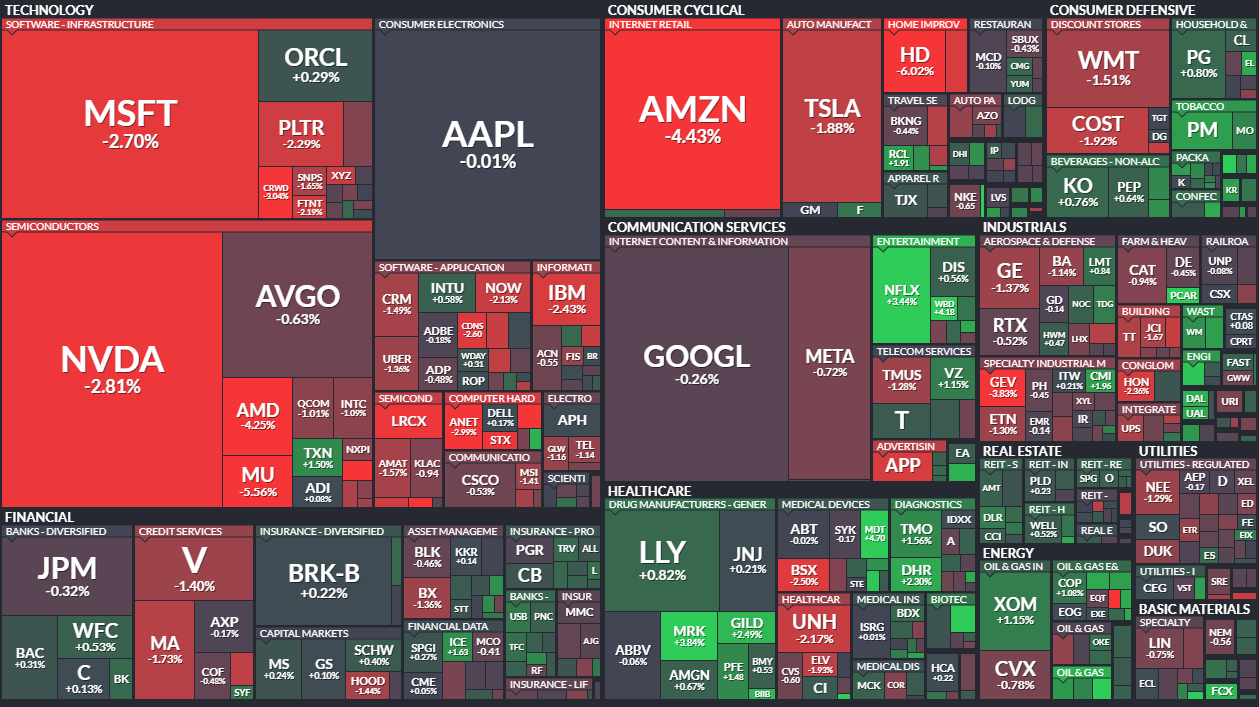
US stocks closed Tuesday in negative territory, with all major indices marking their lowest levels in a month. The market was pressured by a sharp decline in technology heavyweights, traditionally responsible for driving both the S&P 500 and Nasdaq. Amazon lost more than four percent, and Microsoft dropped over two after a downgrade by Rothschild & Co Redburn.
Concerns over stretched valuations added pressure to chipmakers, turning yesterday’s former growth engine into a source of volatility.
Labor Market Weakness Emerges as a Key Risk
Equities partially rebounded from session lows after ADP data showed early signs of cooling in the labor market. US employers shed around 2,500 jobs per week over the four weeks ending November 1 — a notable shift from the tight conditions seen earlier in the year. The market interpreted this as an argument for the Federal Reserve to proceed cautiously.
The 10-year Treasury yield slipped toward four percent, reflecting rising demand for safe-haven assets. Fed officials noted that inflation remains elevated but no longer shows signs of re-acceleration.
Consumer Strength Fades Ahead of Major Retail Earnings
Home Depot’s six-percent drop became another blow to sentiment. The retailer lowered its full-year profit outlook and signaled weakening demand for expensive home improvement products.
Retailers take center stage this week. Earnings from Target and Walmart — due in the coming days — will highlight how resilient US consumers remain amid high interest rates and rising household debt burdens.
A Dense Block of Macro Data Lies Ahead
The week is packed with delayed economic releases. Investors are awaiting trade data, FOMC minutes, housing market indicators, unemployment figures, PMI reports, and consumer sentiment numbers. Markets continue to price in roughly a forty-eight percent probability of a rate cut at the December meeting, reflecting the uncertain macro backdrop.
Corporate Earnings Strong, but Risks Are Coming Into Focus
Despite the negative market tone, Q3 earnings results remain exceptionally strong. More than eighty percent of S&P 500 companies exceeded analyst expectations — marking the best quarter since 2021. Earnings growth nearly doubled early forecasts.
However, near-term sentiment hinges not on previous performance but on whether companies can sustain revenue and margins in a decelerating economy.
Global Markets Echo US Weakness
Selling pressure extended overseas. European equities hit monthly lows, Japan’s Nikkei fell more than three percent, and Chinese markets declined as concerns grew over industrial demand and economic momentum.
Investors are shifting toward cash and government bonds, reflected in declining inflation expectations and falling yields.
Sector Leaders and Laggards in the US Market
The technology sector was the main drag. The pullback extended across the entire group — from Amazon and Microsoft to Nvidia and Tesla. Lower ratings for key players and reduced risk appetite ahead of Nvidia’s report amplified the sell-off.
Chipmakers saw some of the steepest declines, including Marvell, Micron, AMD, and ARM.
At the same time, several companies demonstrated resilience. Amer Sports delivered stronger-than-expected revenue growth, Medtronic surpassed profit forecasts, and Warner Bros Discovery rallied after reports of a potential acquisition bid.
Subscribe to stay up to date with the latest events in the financial markets.
Telegram: @bigstakeinvest
Twitter: @BigStakeTrades
Telegram: @bigstakeinvest
Twitter: @BigStakeTrades