Volatile Start to the Week: From AI Euphoria to Valuation Check
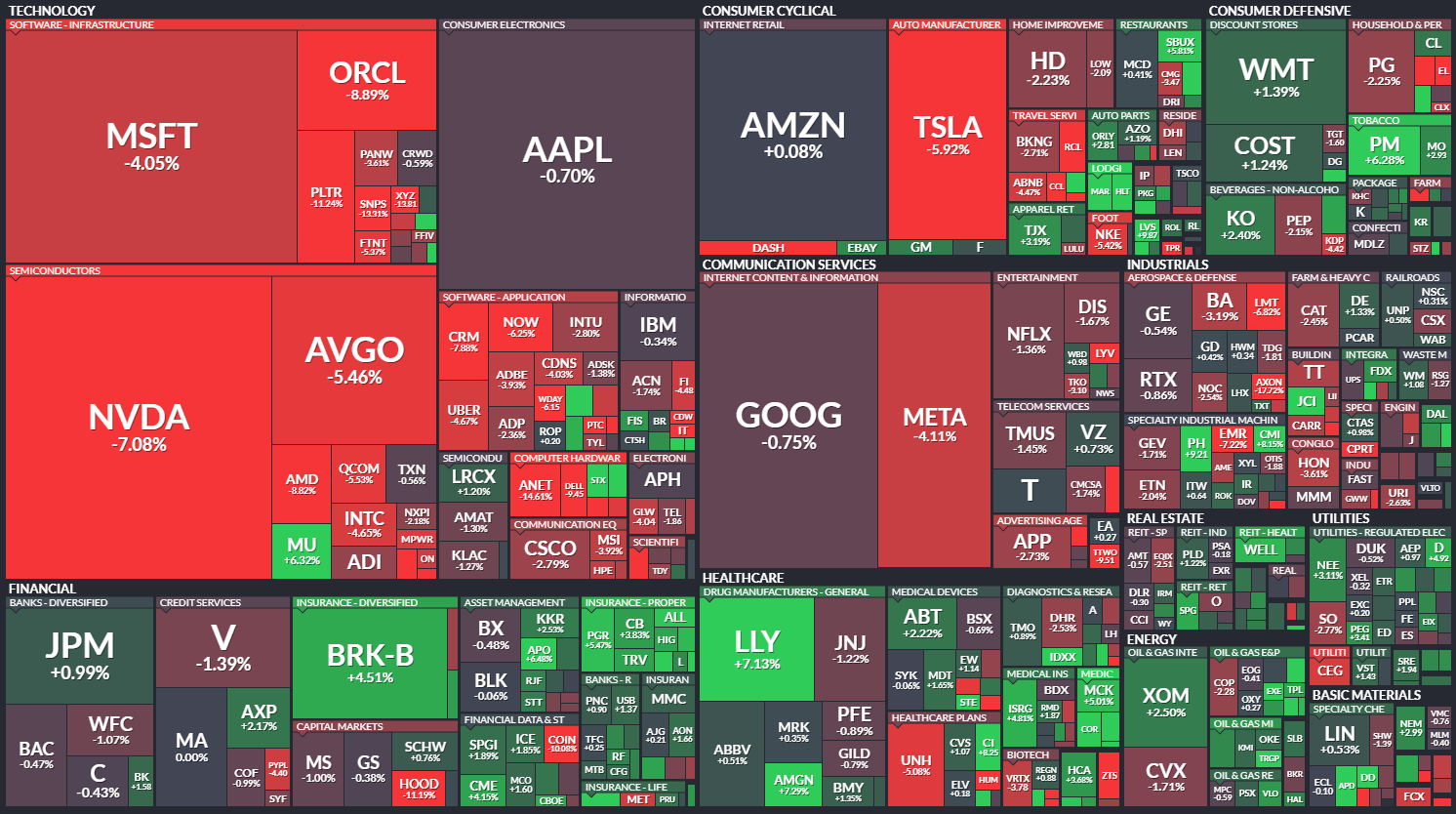
The first week of November opened with mixed momentum. On Monday, buyers leaned on AI and M&A news, lifting the S&P 500 and Nasdaq, while the Dow lagged due to weakness in several components. By Tuesday, focus shifted to profit-taking in megacaps and AI infrastructure names amid growing doubts about stretched valuations. Warnings from major banks about a potential 10% correction in the next 12–24 months intensified selling, pushing indexes to local lows.
Chips as a Market Barometer: Surges and Selloffs
Semiconductors once again became the pulse of the market. After disappointing guidance from AI hardware suppliers, some stocks plunged, only to rebound sharply the next day on strong earnings and analyst upgrades — showing how fragile sentiment remains. Later in the week, another wave of weakness returned as guidance cuts reignited valuation fears. For investors, the message was clear: without solid backlog visibility and margin improvement, AI-linked rallies remain highly unstable.
Yields and the Fed: Dovish Words vs. Hard Data
The Fed narrative remained mixed. Dovish remarks from some policymakers about overtightening helped growth stocks early in the week. Yet every stronger-than-expected jobs or services report reignited rate fears, pushing 10-year yields to new local highs. Investors continue to juggle hopes for rate cuts with concerns about sticky service inflation. The result: each basis point in long-term yields instantly ripples through equity valuations, especially among high-duration tech names.
Macro Picture: Services Accelerate, Industry Struggles, Jobs Cool
Economic data painted a divided picture. The ISM manufacturing index slipped further below 50, highlighting industrial weakness, while services accelerated at the fastest pace in eight months. However, the price component of the ISM services report hit a three-year high — an unwelcome sign for inflation watchers. Private payroll data surprised to the upside, but a surge in announced layoffs quickly restored caution. The market continues to trade a fragile balance — growth soft enough for rate cuts, but not weak enough to crush earnings.
Legal and Policy Front: The Tariff Showdown Nears Its Endgame
The Supreme Court’s skeptical tone toward President Trump’s “reciprocal tariffs” added a new layer of uncertainty. Justices questioned the legality of invoking emergency powers to levy tariffs — a ruling against them could force the refund of over $80 billion in collected duties. For markets, that’s a double-edged sword: it could ease import inflation, but also limit executive flexibility to support domestic industries through rapid tariff adjustments.
Earnings Season: Beats Remain Strong, but Growth Slows
Around 80% of S&P 500 companies beat forecasts, keeping the earnings season upbeat. Yet the pace of profit and sales growth has slowed from Q2, and investors have become more selective. Strong reports without forward guidance upgrades no longer guarantee post-earnings rallies. The focus has shifted toward cash flow quality, margin trends, and forward demand visibility — particularly in AI infrastructure and industrials tied to data center expansion.
The Shutdown: A Persistent Drag on Sentiment
The record-long US government shutdown continues to cloud investor sentiment and distort economic data. While not a direct market catalyst, it heightens uncertainty around employment, consumption, and fiscal reporting. Any hint of bipartisan progress on reopening would likely compress risk premiums in Treasuries and improve risk appetite across equities.
Sector Landscape: From Consumers to Biotech
Cyclicals and defensives moved unevenly as yields and data shifts rippled through the tape. In consumer names, strong earnings surprises triggered rallies, while weak e-commerce and retail guidance was punished with double-digit drops. Biotech volatility spiked again, with clinical trial headlines driving outsized moves. In tech, cash flow discipline now matters as much as top-line growth — the divide between profitable growth and speculative hype keeps widening.
Tactical View for Investors
Given the interplay of earnings, yields, and inflation, a pragmatic approach is key. In high-duration sectors, sensitivity to long-term rates and service inflation remains decisive. Within the AI trade, investors should differentiate between firms with verifiable backlog and improving margins and those still priced on narrative alone. The market now rewards forward guidance more than backward-looking beats. Defensive stocks offer limited safety if valuations are already stretched — bad news there hits just as hard as in growth.
Outlook: Data, Courts, and Liquidity Rhythms
The next triggers remain familiar — labor and inflation data, the Supreme Court’s tariff ruling, and Treasury issuance dynamics. Softer labor indicators or cooling service inflation would reinforce the case for further Fed easing. Yet if long-term inflation expectations climb again, yields could quickly reverse. Treasury’s quarterly funding mix between bills and bonds will continue shaping liquidity conditions and market volatility into year-end.
Bottom Line: No Free Lunch in This Market
Early November reminded investors that in an environment of slowing growth, uneven inflation, and high multiples, every “better than expected” headline fades fast without a stronger forward outlook. Discipline on valuation, focus on cash flow, and attention to real demand drivers matter more than hype. The market remains headline-driven day to day — but the true direction of capital still follows rates, margins, and the ability to turn AI buzz into sustainable profit.
Subscribe to stay up to date with the latest events in the financial markets.
Telegram: @bigstakeinvest
Twitter: @BigStakeTrades
Telegram: @bigstakeinvest
Twitter: @BigStakeTrades